Thinking about buying land in Fairfield’s 05455? The views and privacy can be incredible, but the real win is choosing a parcel that you can actually build on without surprises. With rural Vermont acreage, the keys are access, zoning, septic and water feasibility, and timelines that fit your plan. In this guide, you’ll learn the exact checks to make, where to verify rules, and how to keep your due diligence on track. Let’s dive in.
Start with access and road class
Access can make or break a land deal in Fairfield. The town’s bylaws define a Town Road as a road maintained by the town and classified as Class 3 or better. Class 4 roads are not maintained in the same way and often have winter access limits. Before you get attached to a parcel, confirm whether the road is town maintained year-round and who is responsible for snowplowing.
Fairfield allows development on lots without frontage only if the Planning Commission approves it and only when there is legal access. That means a recorded easement or right-of-way at least 20 feet wide, or frontage on a Class IV road that meets criteria. If you are relying on an informal track or an unrecorded access, your project may stall. Review the town’s Land Use & Development Regulations for definitions and standards, then verify access in the land records.
Driveway permits and standards
If you plan a new driveway, you will need an access permit. Driveways that connect to a town road must be approved by the Selectboard. If your driveway connects to a state highway, you must obtain a VTrans access permit. The bylaws reference VTrans B-71 standards and set minimums for safe access, including:
- Minimum widths, such as 12 feet for driveways under 300 feet long and 16 feet for 300 feet or longer.
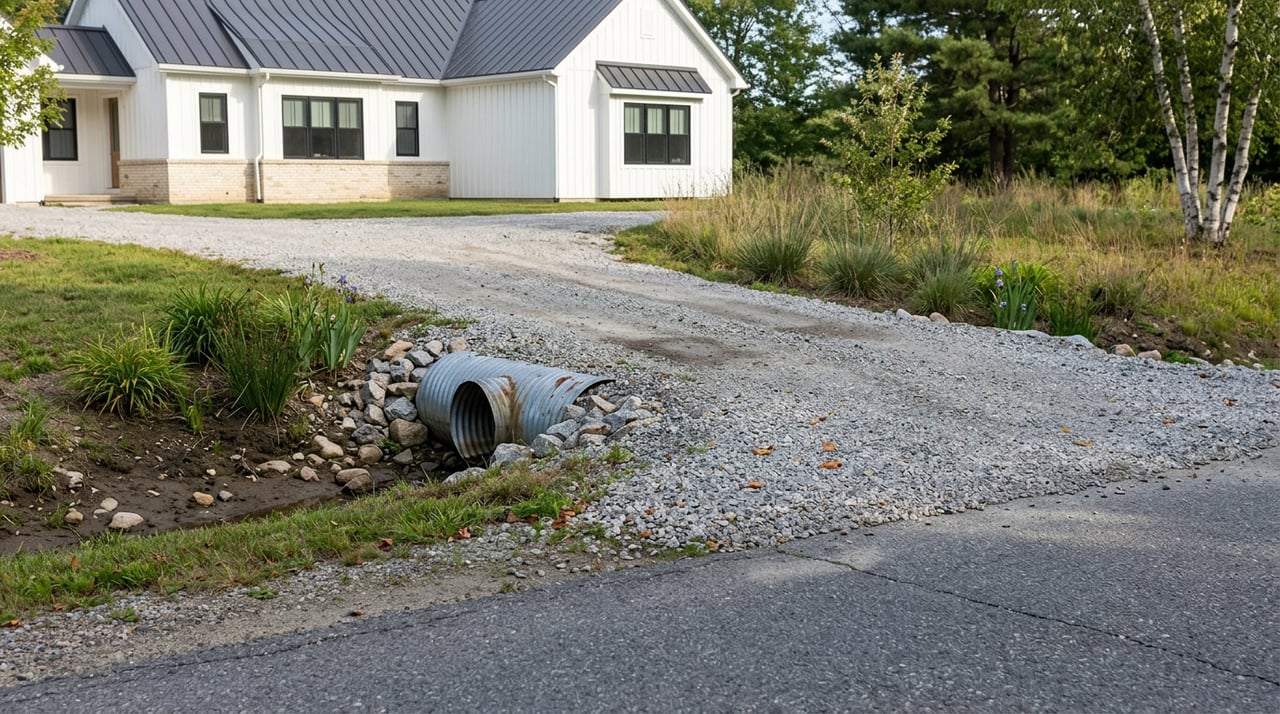
- Minimum culvert diameter of 15 inches where needed.
- Pull-offs or turnarounds and grade limits so emergency vehicles can get in and out.
Obtain the access permit before you start any excavation. Starting driveway work without a permit can create enforcement risk or require you to undo work. For remote parcels, ask the town about any private road upgrades that might be required for multiple lots. You can find the rules and contacts in Fairfield’s bylaws and on the town site.
Read Fairfield’s Land Use & Development Regulations
Know your zoning basics
Zoning shapes what you can build and where you can place it. In Fairfield:
- Minimum lot sizes vary by district. The Village District minimum is roughly one quarter acre. Agriculture, Uplands, and Pond & Swamp Districts have minimums around one acre.
- Minimum road frontage is 60 feet in the Village, and 200 feet in the agricultural and other rural districts.
- Front setbacks are larger on certain named roads, such as 45 feet along VT Route 36, North Road, and South Road, and 35 feet along other roads. The maximum building height is typically 35 feet.
Confirm the parcel’s district and check the dimensional standards in Table 4.1 of the regulations before you invest in surveys or design work. If you are buying a split-off, ask whether the parcel is an existing legal lot of record or a to-be-created lot. Subdivision review is required when land is divided into two or more lots, and the Planning Commission handles sketch plan through final plat.
Wastewater and water are gating items
In Fairfield, most structures that generate wastewater or require potable water must obtain a state Wastewater System and Potable Water Supply Permit from the Vermont Department of Environmental Conservation. The town will not allow construction to begin under a zoning permit until this DEC permit is issued, and a Certificate of Occupancy hinges on completion and certification of the installed system. In practice, septic and water feasibility often decide whether a parcel is buildable.
Start with a soils screen
Begin with a quick soils review to identify red flags like shallow bedrock or wet soils. The USDA NRCS Web Soil Survey is the authoritative mapping tool for a first pass. Treat it as a screen, not a final answer, then bring in a local professional if the site looks promising.
Use the NRCS Web Soil Survey to screen soils
On-site evaluation steps
A typical path to confirm feasibility and secure permits looks like this:
- Hire a licensed septic designer or qualified soil scientist for a site evaluation.
- Dig test pits in the proposed dispersal area, often two or more, and perform percolation testing where required.
- Based on the soil profile and isolations, the designer recommends a conventional leachfield, an advanced treatment system, or an off-lot solution.
- Prepare and submit the DEC wastewater and potable water permit application, if required.
- Once approved, install the system per design and secure installation certifications so the town can issue a Certificate of Occupancy.
If a well is needed, ask the seller for any existing well logs and water tests. If none are available, plan for a test well drilled by a licensed driller and sample for bacteria and nitrate. Some sites also require a yield test.
Utilities and broadband on rural parcels
Electric service is a major budget and schedule item on backroads. Many Fairfield parcels are served by the Vermont Electric Cooperative. Service extensions and pole upgrades can add cost on long rural runs, so contact the utility early to confirm the provider, requirements for transformer placement, and extension estimates.
Check VEC’s service territory and start the process
Broadband and communications coverage vary by location. Regional groups like the Northwest Regional Planning Commission are involved in broadband and Communications Union District planning. Ask the town and NRPC about current coverage in your area, especially if you work remotely or plan to stream regularly.
Explore NRPC’s community development resources
Permitting sequence and realistic timelines
Here is a high-level sequence that keeps you on track from offer to closing and beyond. Timelines are approximate and depend on season, site conditions, and application completeness.
- Title and land records. Pull the deed, plans, and recorded easements to confirm legal access and any restrictions. Start here, especially if access is via a right-of-way or a Class 4 road. Typical timing is 1 to 4 weeks, depending on office hours and record availability.
- Preliminary screening. Use the NRCS Web Soil Survey for a soils overview, check FEMA flood maps, and look at utility availability. This early scan helps you decide whether to invest in test pits.
- Soils and well testing. Schedule your septic designer for test pits and a site evaluation. Field work and lab results often take 2 to 6 weeks, weather and season dependent.
- Access permits. Apply for the curb cut or driveway permit from the Selectboard, and a VTrans permit if the access connects to a state highway. Reviews can take a few weeks to a few months depending on site work and any road upgrades.
- State wastewater and water permit. Submit your DEC application once your designer has a complete package. Straightforward applications can be processed in a few weeks to a few months. Complex sites, off-lot solutions, or appeals can take longer. The town conditions local construction and occupancy on this step, so plan your schedule with that in mind.
- Building and construction. Once permits are in hand, construction of a modest custom home in rural Vermont often takes 9 to 18 months or more. Weather, builder availability, and scope drive this timetable.
Find Town Clerk contact and land record info
Learn about FEMA flood mapping and FIRMs
When to ask about Act 250
Act 250 is Vermont’s land use review for larger or potentially impactful projects. If you plan a multi-lot subdivision, commercial use, multi-unit housing, or large clearings, consider filing a jurisdictional inquiry with your Act 250 district early. Thresholds depend on project scale and context. When in doubt, consult professionals who work with Vermont land use law or contact the district commission to confirm whether Act 250 applies.
Quick due diligence checklist
Use this checklist to keep your evaluation organized:
- Pull the deed, survey, and any recorded easements. Confirm legal access in the land records.
- Confirm the zoning district and dimensional standards. Flag any nonconforming lot size, frontage, or setback.
- Screen soils on the NRCS Web Soil Survey. If soils look marginal, budget for an engineered system.
- Verify access and road class, including winter maintenance and emergency access.
- Contact the electric utility about service availability and extension costs. Get a written estimate for long runs.
- Hire a licensed septic designer to dig test pits and prepare a DEC permit application if required.
- Apply for driveway and curb-cut permits before any site work.
- Check FEMA flood maps and the state’s natural resource layers for wetlands or river corridors. Secure elevation documentation if needed.
- If your project is larger than a single home, ask whether Act 250 could apply and consider a jurisdictional inquiry.
Common pitfalls to avoid
- Assuming a large parcel is automatically buildable. Steep slopes, shallow bedrock, or wet soils can limit development. Confirm with a soils evaluation.
- Relying on unrecorded access. A lender or the town may not accept an informal track or handshake right-of-way. Make sure access is recorded and meets width standards.
- Underestimating utility extensions. Rural electric or broadband runs can be expensive. Contact providers early and plan the trenching and clearing needed.
- Expecting a conventional septic system. Some backroad sites require advanced treatment or engineered alternatives. These add cost and time to permitting.
Local contacts and resources
- Town of Fairfield website. Meetings, Selectboard, Planning Commission, and contacts.
- Town Clerk. Land records, hours, and fees for deed copies and surveys.
- Fairfield Land Use & Development Regulations. Zoning, subdivision, access, and driveway standards.
- Fairfield Town Plan. Context on open space and planning priorities.
- NRCS Web Soil Survey. Soils screening tool for early due diligence.
- Vermont Electric Cooperative. Service territory and new service process.
- FEMA resources. Flood mapping and FIRMs.
Visit the Town of Fairfield website
Read Fairfield’s Land Use & Development Regulations
View the Fairfield Town Clerk page
Open the Fairfield Town Plan
Use the NRCS Web Soil Survey
Check VEC’s service territory
Learn about FEMA flood mapping
Ready to evaluate a specific parcel in 05455 or anywhere in Franklin County? Get a local partner who knows the roads, the bylaws, and the process. Reach out to Sherry Corbeil for clear next steps and a smooth path from land search to closing.
FAQs
What makes a land parcel buildable in Fairfield, VT?
- You need confirmed legal access, compliance with zoning dimensions, and septic and water feasibility that can secure a state Wastewater and Potable Water Supply Permit when required.
How do I verify winter road access in Fairfield?
- Confirm the road class and maintenance with the town. Class 3 roads are town maintained, while Class 4 roads are not maintained the same way and can limit winter access.
Do I need a state wastewater and water permit to build?
- If your project generates wastewater or requires potable water, Fairfield requires a DEC permit before the town issues a zoning permit and allows occupancy.
What are typical driveway rules for rural lots?
- You need an access permit, driveway widths must meet minimums, culverts are often required at 15 inches or more, and the design must allow emergency vehicle access.
Who provides electricity to rural land in Fairfield?
- Many parcels are served by the Vermont Electric Cooperative. Contact the utility early to confirm service and get extension cost estimates.
How long does permitting usually take in 05455?
- Expect several weeks for records and screening, 2 to 6 weeks for soils work, weeks to months for the state wastewater permit, and a few weeks to months for driveway permits, depending on site specifics.
When should I ask about Act 250 for a Fairfield project?
- If you plan multi-lot subdivision, commercial use, large clearings, or multi-unit housing, file a jurisdictional inquiry early to confirm whether Act 250 applies.